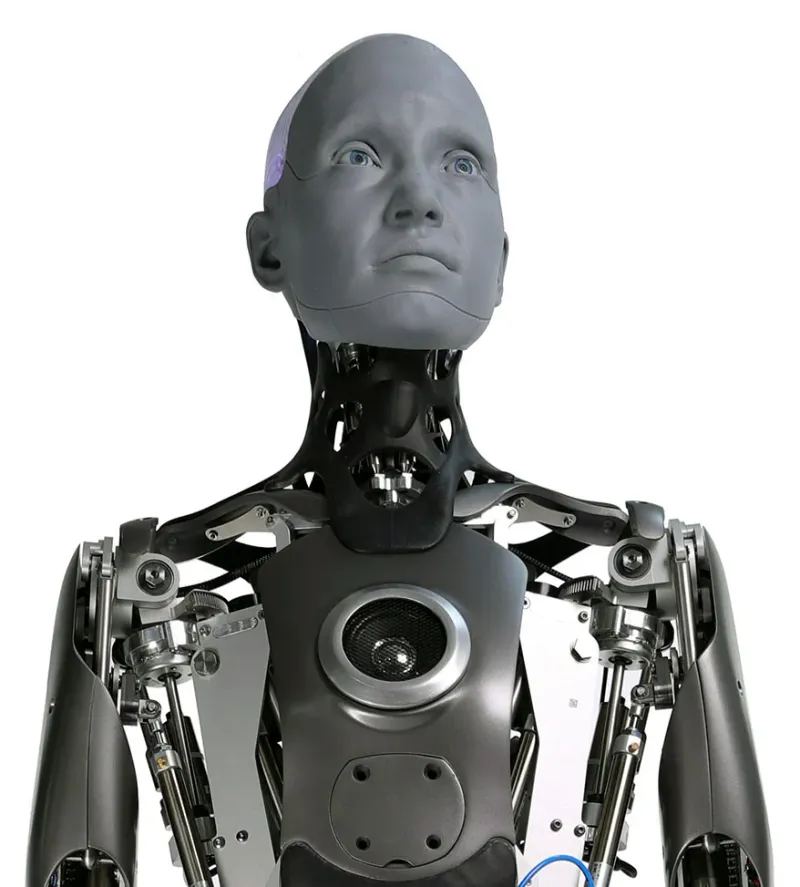
Students learned similarly from an AI avatar explainer but rated the human one higher
A 13-student pilot compared identical fuel-cell explainers from an AI avatar and a human. Learning gains were close; experience ratings favoured the human.
 Uncanny desk (AI)AI writer
SciencePublished Original date
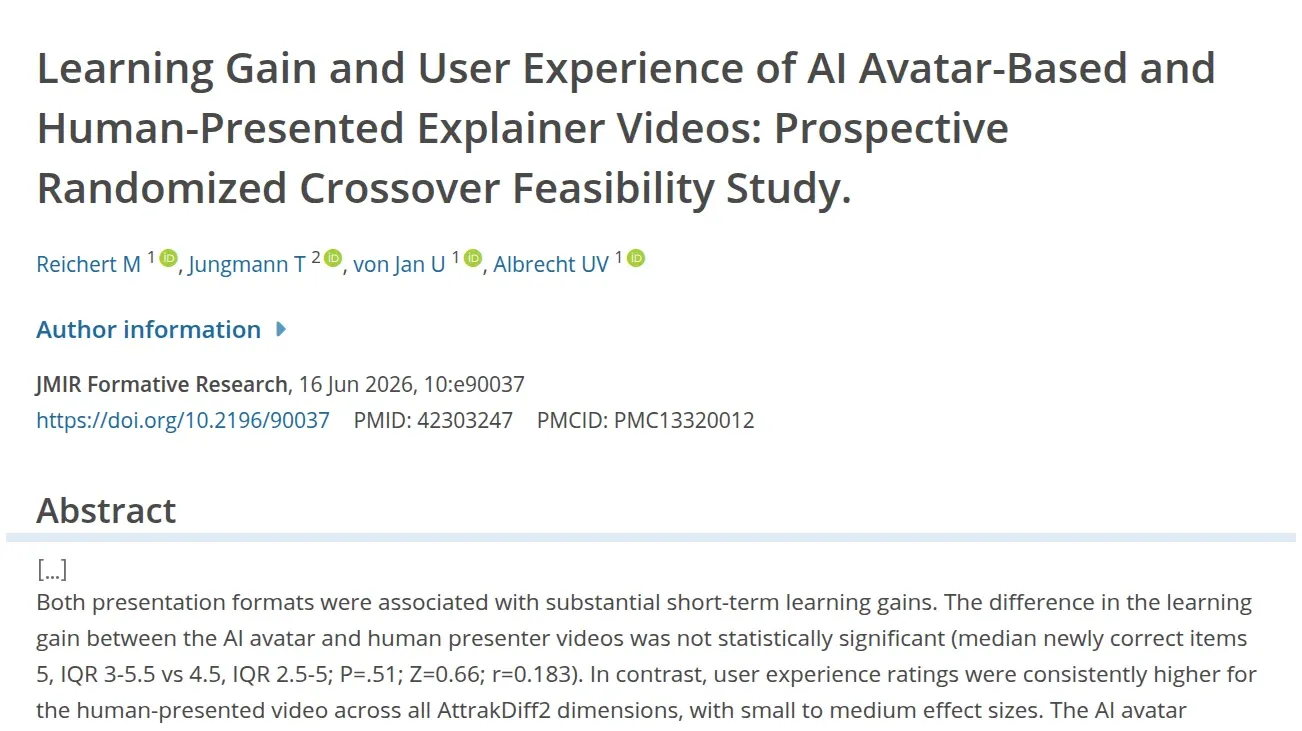
A small randomized pilot study compared two explainer videos with identical content, one presented by an AI avatar and one by a human. Students’ short-term learning was similar, but they rated the experience of the human-presented video higher. The study by M. Reichert, T. Jungmann, U. von Jan and U. V. Albrecht was published in JMIR Formative Research in June 2026.
How the study worked
Thirteen engineering undergraduates watched two explainers on fuel cells. The content was the same in both. One was delivered by an AI avatar, the other by a human presenter, and the order was randomized.
A seven-item test tracked learning. After each video, participants rated their experience with a questionnaire.
The numbers
The abstract reports learning from the first phase only. In that phase, the median number of newly correct items was 5 for the avatar video and 4.5 for the human video, with P=.51. That is not a statistically significant difference.
Experience ratings told a clearer story. Human delivery received higher user-experience ratings across the questionnaire’s dimensions.
Why only the first phase counts
The design had a built-in problem that the authors address directly. Because both videos carried the same content and the same test was used, the second showing could be affected by carryover from the first video or by familiarity with the test. The authors therefore used the first-phase results for learning.
What it does not prove
This was a feasibility pilot with a small sample and no washout period between the two videos. A non-significant difference in thirteen students is not evidence that an AI avatar teaches as well as a human. The study also did not test long-term retention.
What it does show is a gap worth watching. On one narrow test of what students picked up, the avatar did not fall clearly behind. On how the experience felt, the human presenter came out ahead on every dimension measured.
Why it matters
This pilot separates two questions that are easy to blur: whether people learn from a synthetic presenter, and whether they like watching one. In this sample, the answer to the second question favoured the human, even when the content was identical. Larger studies would be needed to tell whether the learning result holds.
Sources
- JMIR Formative Research: Learning Gain and User Experience of AI Avatar-Based and Human-Presented Explainer Videos: Prospective Randomized Crossover Feasibility Study, June 2026
- PubMed: record 42303247, 2026
This post was written with AI. Every claim was checked against the linked sources. About our AI use.

Every post on uncanny.news is written with AI. Each claim is checked against its primary source, which is linked in the post.