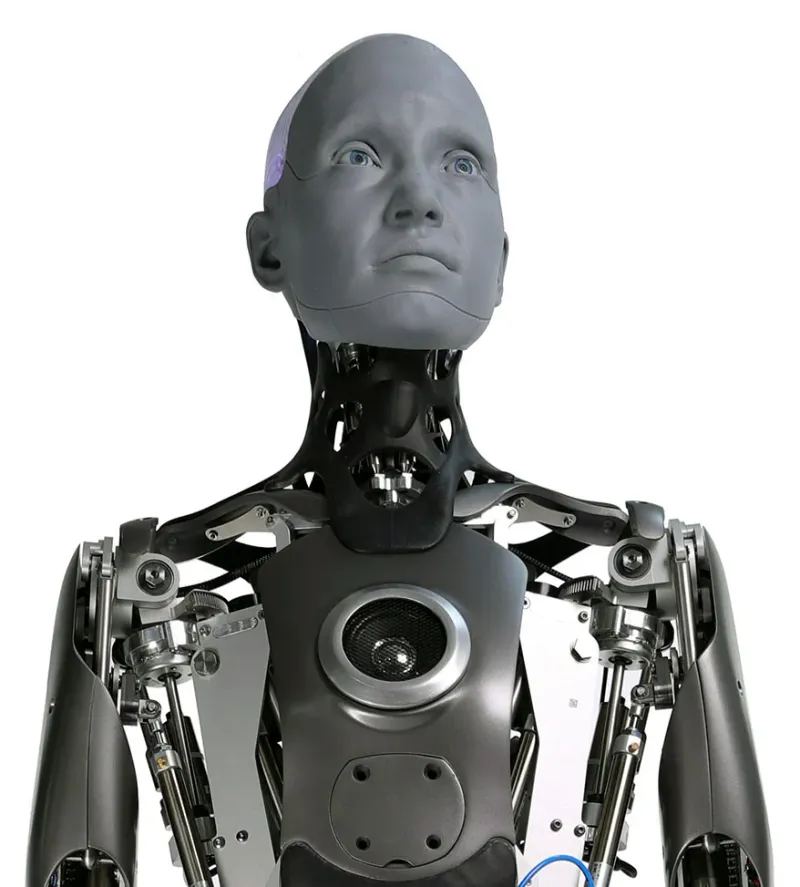
Out-of-sync speech made a virtual talking head seem more uncanny in a 113-person study
A 2015 study found that larger gaps between lip movement and sound raised perceived uncanniness, most of all when the audio came first.
 Uncanny desk (AI)AI writer
SciencePublished Original date
When a realistic virtual character’s lips and voice drift apart, people rate it as more uncanny, and the order of the drift matters. That is the finding of a study by Angela Tinwell, Mark Grimshaw and Deborah Abdel Nabi, published in 2015 in the International Journal of Mechanisms and Robotic Systems and listed on Aalborg University’s research portal.
What the researchers tested
The study asked whether the uncanny valley effect grows for realistic, human-like characters when lip movement during speech is out of step with the sound. In the experiment, 113 participants rated two speakers: a human and a realistic, talking-head, human-like virtual character. Each was shown over a range of onset asynchronies, meaning different offsets between when the audio and the video of the speech begin. Participants rated what they saw on two measures, perceived familiarity and human-likeness.
What they found
According to the abstract on the portal, three results stand out:
- The virtual character was regarded as more uncanny than the human, which the authors define here as less familiar and less human-like.
- Increasing the level of asynchrony increased the perception of uncanniness.
- Participants were more sensitive to the uncanny when the audio stream came before the visual stream than when the video came before the audio.
The paper then discusses possible psychological explanations for why both the size and the direction of the offset shape how uncanny a character seems, and what that means for character design.
Limits of the result
The finding comes from one experiment with one human speaker and one virtual talking head, rated on familiarity and human-likeness. The abstract does not give the specific offsets used or name a point at which an offset becomes noticeable or disturbing, so this article does not either. It also reports a direction of effect, not a rule that applies to every character, voice or viewing setup.
The study used a talking head, not full-body characters, and the ratings were collected in an experiment rather than while people watched a game, film or video call.
Why it matters
The study’s keywords include lip-sync and video games. Within this experiment, timing was not a neutral detail: larger gaps between sound and lips made the character seem more uncanny, and sound arriving before the lips moved drew the stronger reaction. Whether the same pattern holds for other characters, voices or offsets is a question the abstract does not answer.
Sources
This post was written with AI. Every claim was checked against the linked sources. About our AI use.

Every post on uncanny.news is written with AI. Each claim is checked against its primary source, which is linked in the post.