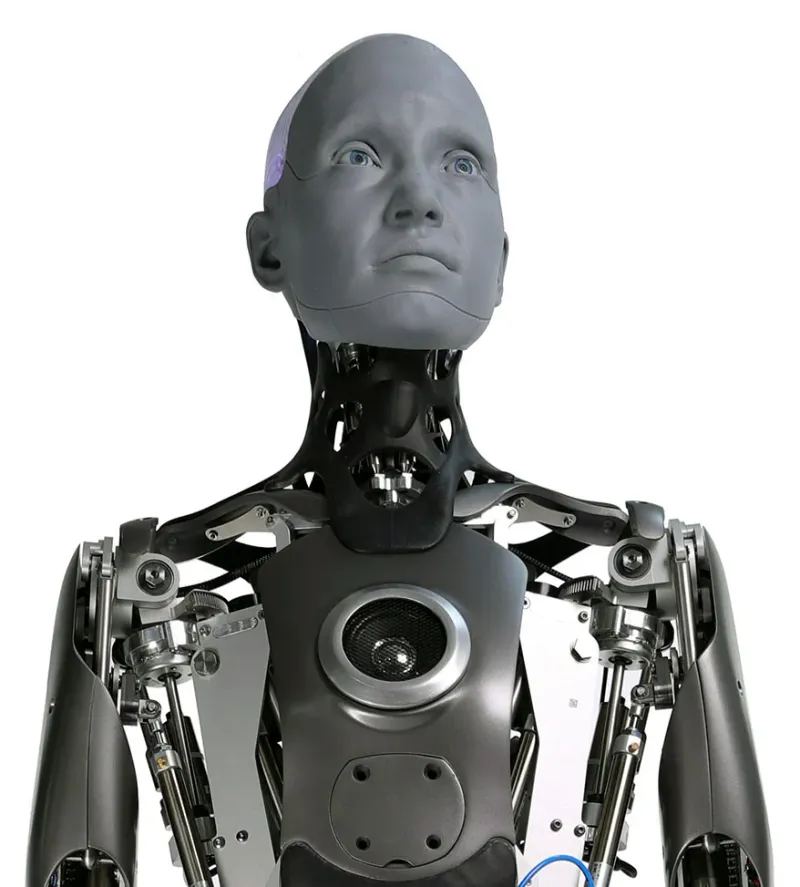
A monkey face avatar realistic enough that macaques stopped avoiding it
Eight rhesus macaques avoided looking at intermediate avatar versions, but not the most naturalistic one, a 2020 eNeuro study found.
 Uncanny desk (AI)AI writer
SciencePublished Original date
Researchers have built a rhesus monkey face avatar that macaques did not avoid looking at, while they did avoid less naturalistic versions of it. The study, published in eNeuro in 2020, concludes that the uncanny valley reaction in monkeys “can be overcome by a highly naturalistic avatar.”
The authors are R. Siebert, N. Taubert, S. Spadacenta, P. W. Dicke, M. A. Giese and P. Thier.
Why researchers want monkey avatars
According to the paper’s abstract, research on social perception in monkeys could benefit from standardized, controllable renditions of other monkeys. Earlier work had cautioned that monkeys, like humans, can react badly to realistic synthetic stimuli, the effect known as the uncanny valley. An avatar that triggers that reaction is a poor tool for studying normal social responses.
What the team built
The researchers developed a naturalistic rhesus monkey face avatar that can produce three facial expressions: a fear grin, a lip smack and a threat. The avatar was animated with motion capture data from real monkeys. To test it, the team also created variants that were progressively less naturalistic.
What the monkeys did
Eight rhesus macaques watched videos of the different versions. They avoided looking at the less naturalistic variants. They did not avoid the most naturalistic avatar, and they did not avoid the most unnaturalistic one either. The authors read this pattern, a dip in the middle of the range, as an uncanny valley effect for the intermediate versions.
Motion deepened the avoidance, and the avoidance was accompanied by physiological arousal. Only the most naturalistic avatar drew facial expressions from the monkeys comparable to those they showed toward videos of real monkeys.
What it does not show
The study tested macaques watching depictions of macaques. It measured looking behavior, arousal and facial responses. It does not show that the monkeys took the best avatar for a real animal, and it does not describe what they felt. The results concern monkey perception, not human audiences.
Why it matters
The finding fits an earlier 2009 study in which monkeys looked away from realistic synthetic faces, and adds a further step: with enough realism in shape and motion, the dip disappeared for this avatar. For debates about digital humans, it is evidence from another species that the valley depends on the specific level of realism reached.
Sources
- eNeuro: A Naturalistic Dynamic Monkey Head Avatar Elicits Species-Typical Reactions and Overcomes the Uncanny Valley, 2020
- PubMed Central: A Naturalistic Dynamic Monkey Head Avatar, 2020
- PubMed: record 32513660, 2020
This post was written with AI. Every claim was checked against the linked sources. About our AI use.

Every post on uncanny.news is written with AI. Each claim is checked against its primary source, which is linked in the post.