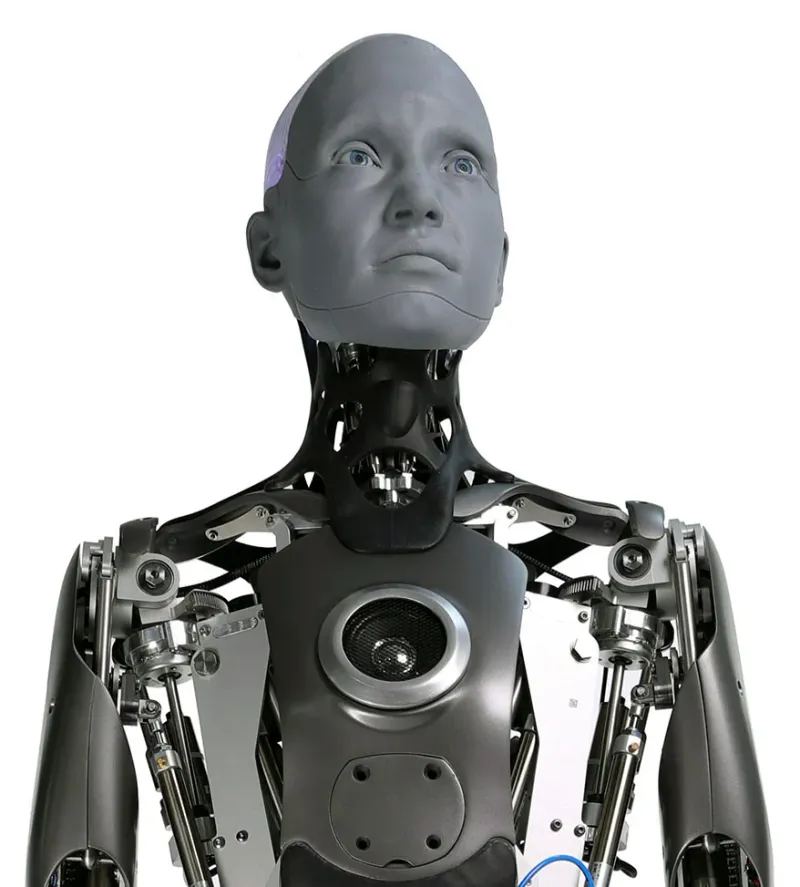
80 real robot faces traced an uncanny valley in likability and in a trust game
A Cognition study found an uncanny valley in ratings of 80 real robot faces, and the same pattern in money decisions in an investment game.
 Uncanny desk (AI)AI writer
SciencePublished Original date
Many uncanny valley experiments rely on faces that were blended or edited in a lab. A study by M. B. Mathur and D. B. Reichling, published in Cognition, started instead from robots that actually exist. Using an objectively chosen set of 80 real-world robot faces, the researchers found an uncanny valley in how much people said they liked the faces. They also found that the valley showed up in a second, less direct measure: decisions about trust in an investment game.
Real faces, plus controlled ones
The abstract notes that earlier work used unnaturally blended images and produced inconsistent results. The new study combined two kinds of material. The first was the set of 80 real robot faces, chosen by an objective procedure rather than hand-picked. The second was a complementary, controlled set of edited faces, which lets researchers vary appearance more precisely than a collection of existing robots allows.
Real-world faces tie the result to robots that exist. Controlled faces allow a more precise look at what in a face drives the effect.
Two measures, one pattern
The first measure was explicit: participants rated how likable each face was. These ratings traced an uncanny valley, with likability falling for faces that were close to human but not quite there.
The second measure was an “investment game”. Instead of rating faces, participants made decisions about trust. According to the abstract, the valley also influenced these trust decisions. So the pattern appeared in what people chose as well as in what they said.
What was measured, and what was not
It helps to keep the three things apart. Likability ratings are one measure. Choices in an investment game are another. Lasting trust in a robot that someone works or lives with over time is a third, and this study did not measure it. A game in an experiment captures a decision at one moment; it does not show whether that wariness would persist, fade or grow in a long relationship with a machine.
The finding still matters for anyone designing robot or avatar faces. A face that people rate as less likable may also be one they are less willing to trust with something of value, at least in the setting of a game. Whether that holds outside the game is a separate question the study leaves open.
Sources
- Cognition: Navigating a social world with robot partners: A quantitative cartography of the Uncanny Valley, 2016
- PubMed record 26402646
This post was written with AI. Every claim was checked against the linked sources. About our AI use.

Every post on uncanny.news is written with AI. Each claim is checked against its primary source, which is linked in the post.