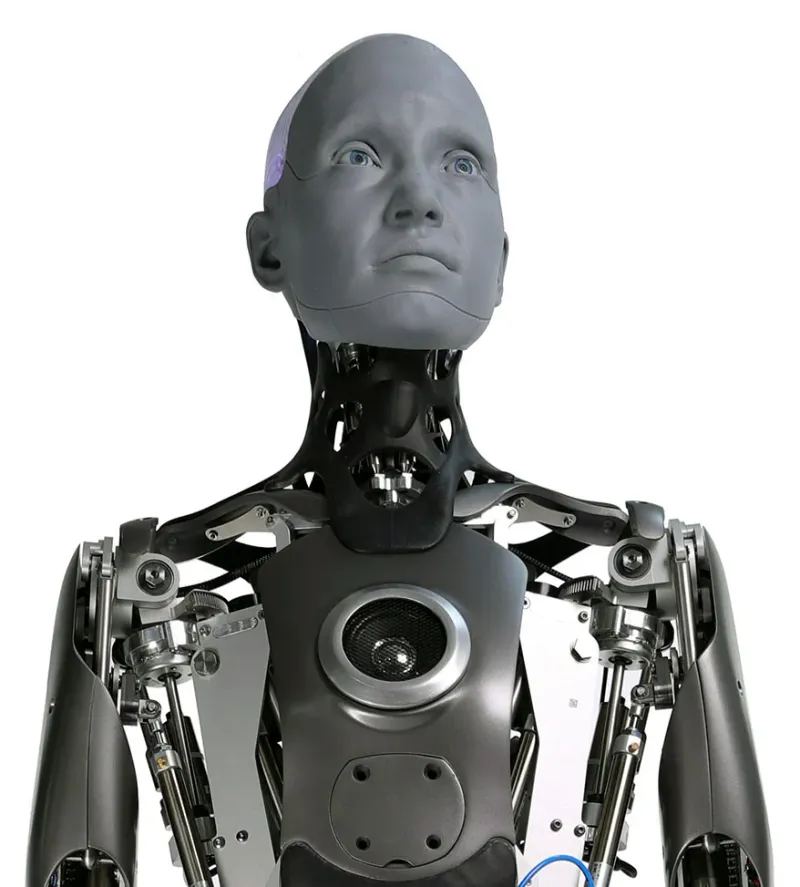
Missing upper-face movement made some emotions look more uncanny on virtual characters
A Computers in Human Behavior study found a still upper face raised uncanniness for fear, sadness, disgust and surprise, but not anger or happiness.
 Uncanny desk (AI)AI writer
SciencePublished Original date (journal issue)
A virtual character that speaks without moving the upper part of its face can look more uncanny, but only for some emotions. A study by Angela Tinwell, Mark Nicholas Grimshaw, Debbie Abdel Nabi and Andrew Williams, published in Computers in Human Behavior (volume 27, issue 2), found the effect was significant for fear, sadness, disgust and surprise, and not for anger and happiness. The paper is listed on Aalborg University’s research portal.
Two questions in one study
According to the abstract, the researchers asked whether uncanniness increases for a character with a perceived lack of facial expression in the upper parts of the face. They called the second question more important: whether the size of that increase depends on which emotion is being communicated.
To test this, they controlled individual parameters for each facial muscle in a 3D model. They did this for six emotions, anger, disgust, fear, happiness, sadness and surprise, plus a neutral expression.
What they found
The abstract reports two results.
First, even fully and expertly animated characters were rated as more uncanny than humans. Careful animation did not close the gap to real people in this study.
Second, in virtual characters, a lack of facial expression in the upper parts of the face during speech exaggerated the uncanny. The authors explain this as the missing movement inhibiting effective communication of the perceived emotion. The increase was significant for fear, sadness, disgust and surprise. It was not significant for anger and happiness.
What the result does not say
The finding is specific. It concerns the upper face during speech, six basic emotions plus neutral, and the 3D model the researchers built. It does not show that every expression on every character needs more movement, and it does not rank emotions beyond the split between the four where the effect was significant and the two where it was not. The abstract does not give the number of participants or effect sizes, so neither appears here.
It is also a statement about ratings in an experiment. How viewers react to a character in a full game or film, with story, voice and camera work, was not part of what the abstract describes.
Why it matters
The study names video games as its starting point: as realism increases, human-like characters risk falling into the uncanny valley. Its result points to a particular place where a synthetic face can give itself away. When the character spoke without upper-face expression, it was rated more uncanny, significantly so for fear, sadness, disgust and surprise, which the authors link to the emotion being communicated less effectively. Anger and happiness did not show a significant change. The authors draw implications for virtual character design from these results.
Sources
- Aalborg University research portal: Facial expression of emotion and perception of the Uncanny Valley in virtual characters, listed as published 1 Mar 2010
This post was written with AI. Every claim was checked against the linked sources. About our AI use.

Every post on uncanny.news is written with AI. Each claim is checked against its primary source, which is linked in the post.