EU AI Act Article 50: what providers and deployers must disclose about AI
Article 50 splits AI transparency duties between providers and deployers, with exceptions for obvious AI and edited text.

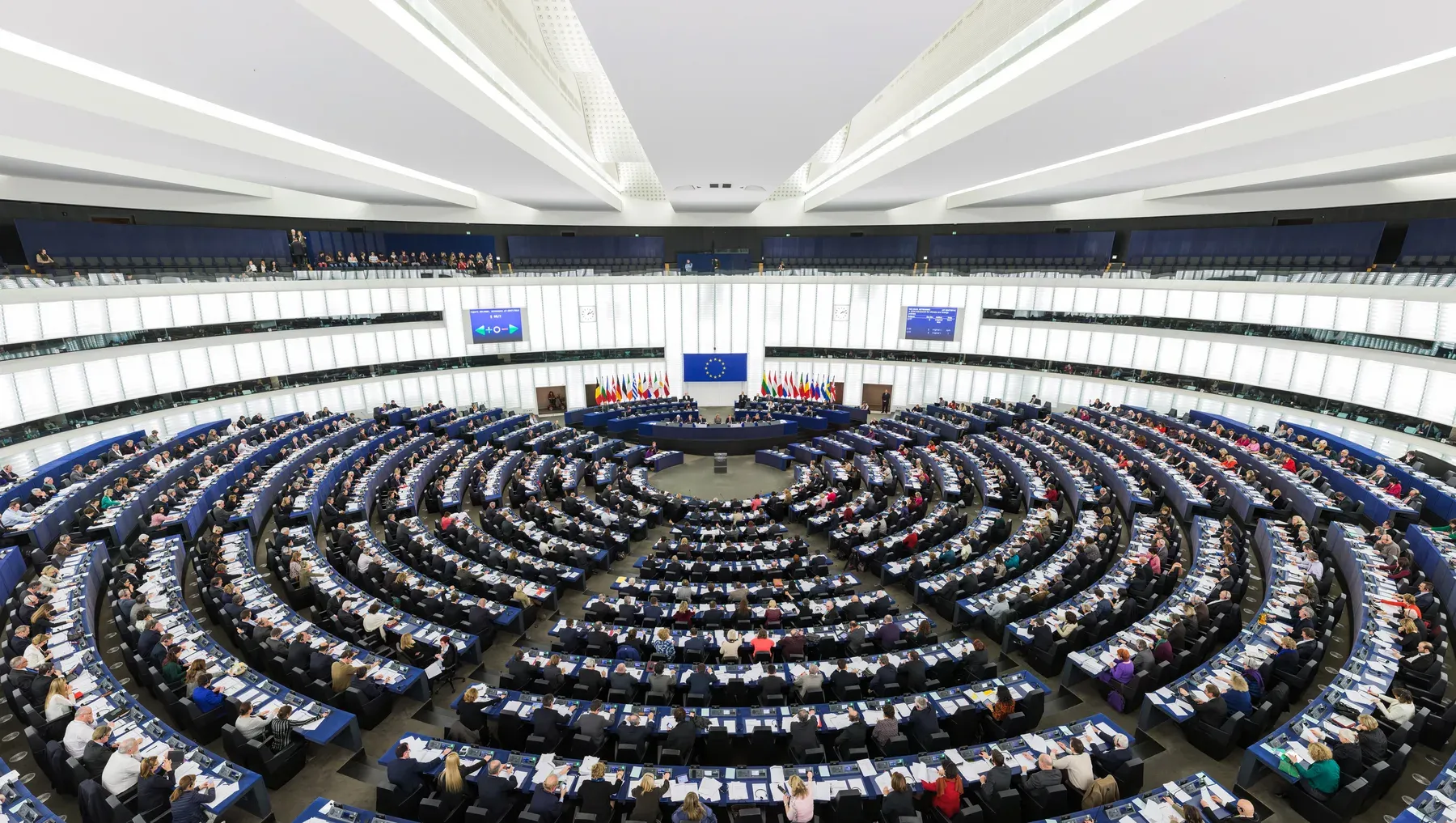
Article 50 of the European Union’s AI Act sets transparency duties for certain AI systems, and it splits them between two groups. Providers, who develop a system or place it on the market, must design AI systems that interact directly with people so those people are told they are dealing with AI, unless that is obvious, and must make synthetic output machine-detectable. Deployers, who use a system under their authority outside purely personal use, must disclose deep fakes and some AI-generated text. The text is in Regulation (EU) 2024/1689, published in the Official Journal on 12 July 2024.
Who counts as provider and deployer
The Act defines a provider as a person or body that develops an AI system, or has one developed, and places it on the market or puts it into service under its own name or trademark. A deployer is a person or body “using an AI system under its authority,” except where the system is used “in the course of a personal non-professional activity.” Purely personal, non-professional use therefore falls outside the deployer duties.
Duties for providers
Under Article 50(1), providers must design AI systems intended to interact directly with people so that those people are informed they are interacting with an AI system. The duty does not apply where this is obvious to a reasonably well-informed, observant and circumspect person, given the circumstances and context of use.
Under Article 50(2), providers of AI systems that generate synthetic audio, image, video or text must ensure the outputs are marked in a machine-readable format and detectable as artificially generated or manipulated. The technical solutions must be effective, interoperable and reliable “as far as this is technically feasible.” Systems that perform an assistive function for standard editing, or do not substantially alter the input data, are exempt.
Duties for deployers
Under Article 50(4), deployers of an AI system that generates or manipulates image, audio or video content constituting a deep fake must disclose that the content has been artificially generated or manipulated. Where the content is part of an evidently artistic, creative, satirical, fictional or analogous work, the duty is limited to disclosing that such content exists, in a way that does not hamper the display or enjoyment of the work.
The Act defines a deep fake as AI-generated or manipulated image, audio or video content that resembles existing persons, objects, places, entities or events and would falsely appear to a person to be authentic or truthful.
Deployers that publish AI-generated or manipulated text to inform the public on matters of public interest must also disclose it. That duty falls away only where the content has undergone human review or editorial control and a natural or legal person holds editorial responsibility for its publication. Both conditions apply together.
Article 50(5) requires the information to be given in a clear and distinguishable manner, at the latest at the time of the first interaction or exposure. The duties in paragraphs 1, 2 and 4 also carve out certain uses authorised by law to detect, prevent, investigate or prosecute criminal offences.
When it applies
The AI Act applies from 2 August 2026 as a general rule, and no earlier date is set for Article 50. The Digital Omnibus on AI, Regulation (EU) 2026/1744, published on 24 July 2026, added one transition for this article. Providers of generative AI systems placed on the market before 2 August 2026 must comply with Article 50(2), the marking duty, by 2 December 2026. The Omnibus recitals call this a transitional period of four months. It does not extend the deadline for the interaction notice in Article 50(1) or for the deployer duties in Article 50(4).
Penalties
Article 99(4) sets administrative fines of up to EUR 15 000 000 or, if the offender is an undertaking, up to 3 % of its total worldwide annual turnover for the preceding financial year, whichever is higher, for breaches of the Article 50 transparency obligations. For SMEs, including start-ups, Article 99(6) applies whichever of the two is lower. The Omnibus added a paragraph 6a that applies the same lower cap to small mid-cap enterprises. These are maximums. Member States set the penalty rules.
Why it matters
Article 50 shifts part of the work of telling real from synthetic away from the viewer: providers build in detectable marks, and deployers say when a realistic image, voice or video is not what it seems. It does not ban synthetic people or deep fakes.
Sources
- EUR-Lex (Official Journal of the EU): Regulation (EU) 2024/1689 (Artificial Intelligence Act), 12 July 2024
- EUR-Lex (Official Journal of the EU): Regulation (EU) 2026/1744 (Digital Omnibus on AI), 24 July 2026
This post was written with AI. Every claim was checked against the linked sources. About our AI use.

Every post on uncanny.news is written with AI. Each claim is checked against its primary source, which is linked in the post.