Six studies, 1,343 people: the uncanny valley replicates with photos, not morphs
A Helsinki team failed to reproduce the uncanny valley with morphed CGI images but found a clear effect with photorealistic robot pictures.

Whether people feel the uncanny valley depends heavily on the pictures researchers show them. That is the finding of six studies with 1,343 participants by a team at the University of Helsinki, published in the journal Heliyon on 26 November 2018. Morphed computer-generated images of a kind used in earlier research did not produce the effect. Photorealistic robot pictures did.
The paper has Jussi Palomäki as first author and Michael Laakasuo as project lead. Its abstract describes the uncanny valley as the eerie feeling people get from robots that look almost, but not quite, human, and notes that it was unclear how well earlier findings would hold up when repeated.
What the team did
Studies 1, 2 and 3a ran in a laboratory the team set up in a public library in Espoo, Finland. Study 1 alone recruited 221 library users, with a mean age of 38.7, a group the authors consider much closer to the general population than the typical psychology experiment. Study 4a ran online with University of Helsinki students. Studies 3b and 4b ran online with Amazon Mechanical Turk workers in the USA, to see whether the results held in a different population and culture.
Each participant rated a single image on a scale from 1 (not at all) to 7 (very), for traits such as creepy, scary, pleasant, trustworthy and friendly.
The results
Studies 1 and 2 used images made by morphing: a robot picture blended step by step into a human picture, meant to produce an unsettling hybrid. These studies did not reproduce the effect.
Studies 3a and 3b used robot photos that an earlier study had already sorted by how uncanny they look. With these, the team found a clear uncanny valley effect.
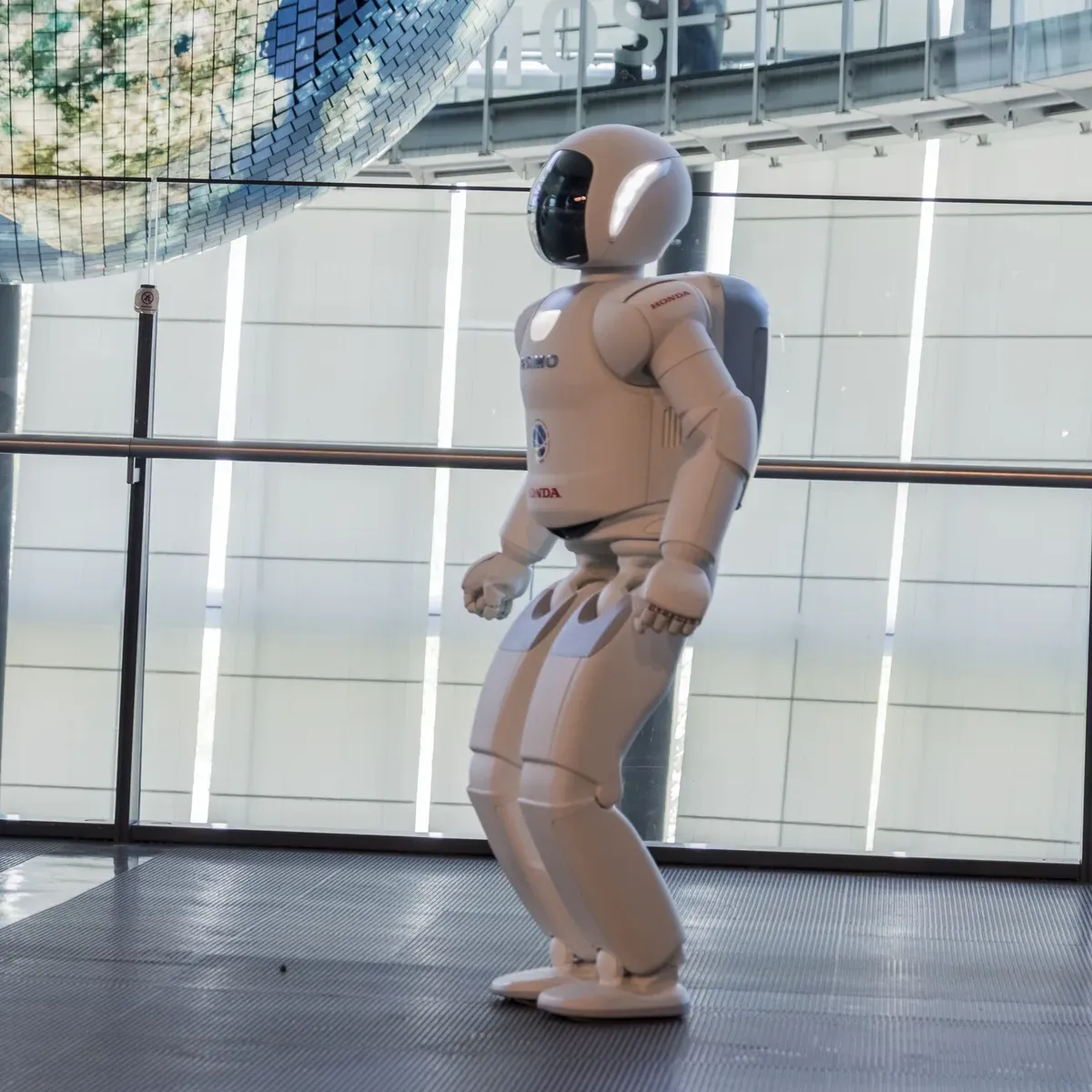
The exploratory Studies 4a and 4b compared four images: a human face, Honda’s Asimo robot, the android Sonny from the film I, Robot, and “iClooney,” an existing picture of Sonny with George Clooney’s face. Here the effect appeared again.
The authors conclude that the effect appears more reliably with pre-validated or obviously uncanny robot pictures than with non-photorealistic morphs, and recommend photorealistic images for future research. They add that their results do not invalidate earlier morphing studies, but show where those methods apply and how sensitive they are to context.
Limits the authors name
The paper lists its own weak points. The uncanny robot image in Study 3 seemed to have an angry expression, which may have shaped ratings. In Study 4, it is unclear why the iClooney image produced strong effects when the morphs in Studies 1 and 2 did not. In Study 1, participants rated the computer-generated human face fairly high on disgust and repulsion, which suggested to the authors that it may not have looked realistic enough.
Why it matters
Much of the public debate treats the uncanny valley as a settled law. This study suggests the effect is real but fragile: it shows up reliably with some images and fails with others. For anyone judging claims that a synthetic face is or is not uncanny, the images and the method behind the test matter as much as the headline.
Sources
- Heliyon via PubMed Central: Evaluating the replicability of the uncanny valley effect, 26 November 2018
This post was written with AI. Every claim was checked against the linked sources. About our AI use.

Every post on uncanny.news is written with AI. Each claim is checked against its primary source, which is linked in the post.